On Chinese New Year, there is often a greater emphasis on cooking and preparing food than on regular days because it's a time for gathering with close relatives, friends, and loved ones to share meals together after paying respects to the gods. Chinese families typically prepare a variety of dishes on Chinese New Year to bring luck and prosperity. Let's explore the meanings of some of the commonly used foods offered during Chinese New Year
Lotus Seeds
Symbolizes having sons to carry on the family lineage.
Chestnut
Represents wealth.
Black Seaweed
Phonetically similar to the word for "wealth" in Chinese, symbolizing prosperity.
Fermented Bean Curd
Fermented bean curd made from dried beans is white and signifies driving away bad luck, making it inauspicious for Chinese New Year.
Whole Fish
Symbolizes abundance and prosperity.
Whole Chicken
Represents advancement and prosperity, symbolizing abundance.
Wheat Noodles
The Longer the noodles, the better, as they symbolize a long and prosperous life.
In northern China, people often eat sweet sticky rice dumplings or sweetened rice balls. Whereas in southern China, people typically enjoy Mantou and dim sum. Chinese people often prepare a lot of food on Chinese New Year because it symbolizes abundance and represents the wealth of the household.
The First Day
Is a day to welcome celestial beings from heaven and earth. Many people choose to eat vegetarian food on this day as a belief in prolonging their life.
The Second Day
The Chinese people will pay respects to ancestors, deities, and do special acts of kindness towards dogs because it is believed that this day is the birthday of dogs.
The Third and Fourth Days
It is a day for sons-in-law to pay respects to their fathers-in-law and mother-in-law.
The Fifth Day
Every one will stay at their own homes to welcome the god of wealth. There will be no visiting as it is believed that it may bring bad luck to both.
The Sixth Day
It is a day for traveling to visit relatives, siblings, and going to temples for blessings.
The Seventh Day
Farmers will bring out their produce to make juice from seven types of vegetables as a celebration. It is also believed to be the birthday of humans. The food for this day is longevity noodles for a long life and raw fish symbolizing success.
The Eighth Day
The Fujian people will have another meal with their families. When it's midnight, everyone will pray for blessings from Thi Kong, the heavenly god.
The Ninth Day
People will pray and offer food to the Jade Emperor.
From The Tenth to The Twelfth Days
It's a time for making hearty meals and enjoying them as dinner with friends and family.
The Thirteenth Day
Eating plain rice with pickled vegetables is practiced as a way to cleanse the body.
The Fourteenth Day
It's a day of preparation for the celebrations on the fifteenth day, which is the Chinese New Year.
The Fifteenth Day
It is the Chinese New Year, which is celebrated with grand festivities, making it the most significant and jubilant occasion in China's calendar.
"The shopping day" January 27th, 2568
Two days before Chinese New Year. It is the day when Thai people of Chinese descent go out to purchase food, fruits, goods, and worship items in preparation for the upcoming Chinese New Year celebrations.
"The worship day" January 28th, 2568
Early morning
Worshipers will pay homage to various deities, offering meats from three animals: pork, duck, and chicken.
Late morning
Worshiping ancestors or relatives who have passed away.
Afternoon
Worshiping siblings who have passed away.
"The festive day," or Chinese New Year, January 29th, 2568
It is a day when everyone goes out for leisure activities and dresses in beautiful clothes. They visit elders to pay their respects and receive blessings while observing various customs and traditions of Chinese New Year.
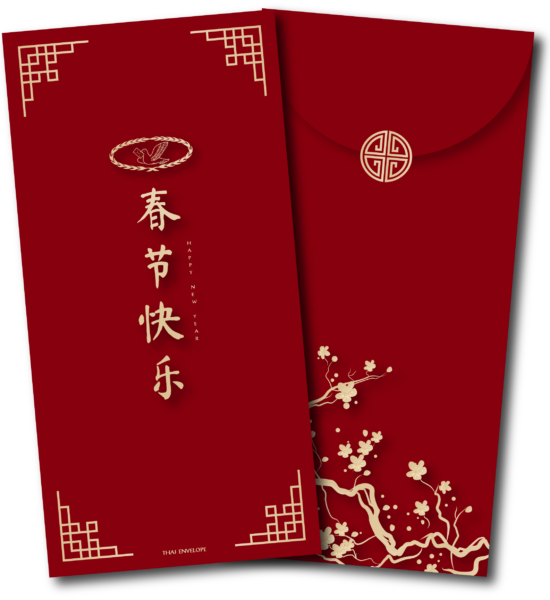
"Ang Pao" or "Tae Eia" is the tradition of giving money to younger children or close relatives during the Chinese New Year The literal meaning of the word "Ang Pao" is a red envelope, where "Ang" translates to red and "Pao" translates to envelope or pouch. It is believed by the Chinese that the color red brings good luck. As for the term "Tae Eia," it means to tighten the waist. "Tae" translates to tighten or press, while "Eia" translates to waist.
This refers to an ancient custom where adults would tie a red string around ancient Chinese coins with a hole in the center and fasten them around the waist of children. Later, the money received on Chinese New Year became known as "Tae Eia.", for Thai people, the money received on Chinese New Year can be called either "Ang Pao" or "Tae Eia." According to Chinese beliefs, it is common to give money in even amounts because even numbers are considered lucky and symbolize doubling the luck or fortune.
"Eab Suai Jee" is a Traditional for money given to children on the Chinese New Year that is older than "Tae Eia". It is believed that evil spirits may harm children on Chinese New Year's Eve, so adults would keep red lanterns lit throughout the night to watch over them.
Legend has it that an old man once gave his child a red paper packet containing gold coins as a gift. When the child played with the coins and accidentally fell asleep, evil spirits approached, but the golden light from the coins drove them away.
Since then, it has been a tradition for people to give gold or silver coins wrapped in red packets to children on Chinese New Year to protect them from evil spirits. Eventually, this practice evolved to include a hundred coins tied with red string, which are then tied around the waist, leading to the term "Tae Eia".
1. For auspiciousness, according to the belief, to ward off bad luck and negativity.
2. As a gift of money in envelopes to teach children the habit of saving and having money to use whenever needed.
The tradition may different from household to household, but the beliefs among Thai people of Chinese descent are generally similar. Adults in the household would traditionally give money to the children, and as the children grow up and start earning their own income, they would take on the role of givers themselves.
However, apart from giving to the children in the household, it is also customary to give "Ang Pao" to older adults. According to tradition, older adults would then return the "Ang Pao" given to them, not necessarily to the same person who gave it to them but to others in exchange, symbolizing the exchange of good fortune.
Besides family members, "Ang Pao" may also be given to individuals outside the household who play important roles in our lives, such as employers, siblings, parents, or guardians, to bring good luck into their lives as well.
新正如意,新年发财 (xīn zhèng rú yì xīn nián fā cái)
Happy New Year! Wishing you prosperity and success.
福禄双全 (fú lù shūng qúan)
Luck, prosperity, and gold with spiritual power.
万事如意 (wàn shì rú yì)
Best wishes.
恭喜发财 (gōng xǐ fā cái)
Riches to you.
财源广进 (cái yuán guǎng jìn)
Gold flows in.
招财进宝 (zhǎo cái jìn bǎo)
Gold flows in steadily.
年年有余 (nián niaán yóu yǚ)
Abundance for consumption and use every year.
事事顺利 (shì shì shùn lì)
Every matter goes smoothly.
金玉满堂 (jīn yù mǎn táng)
Wealth in gold.
一本万利 (yì běn wàn lì)
Lots of profits.
大吉大利 (dà jí dà lì)
Profitable trading.
年年发财 (nián nián fā cái)
Rich forever.
龙马精神 (lóng mǎ jīng shén)
Strong health.
吉祥如意 (jí xiáng rú yì)
Auspicious and fulfilling desires.
好运年年 (hǎo yùn nián nián)
Good luck forever.
四季平安 (sì jì píng ān)
Safe all year round.
一帆风顺 (yì fān fēng shùn)
Smooth sailing in everything.